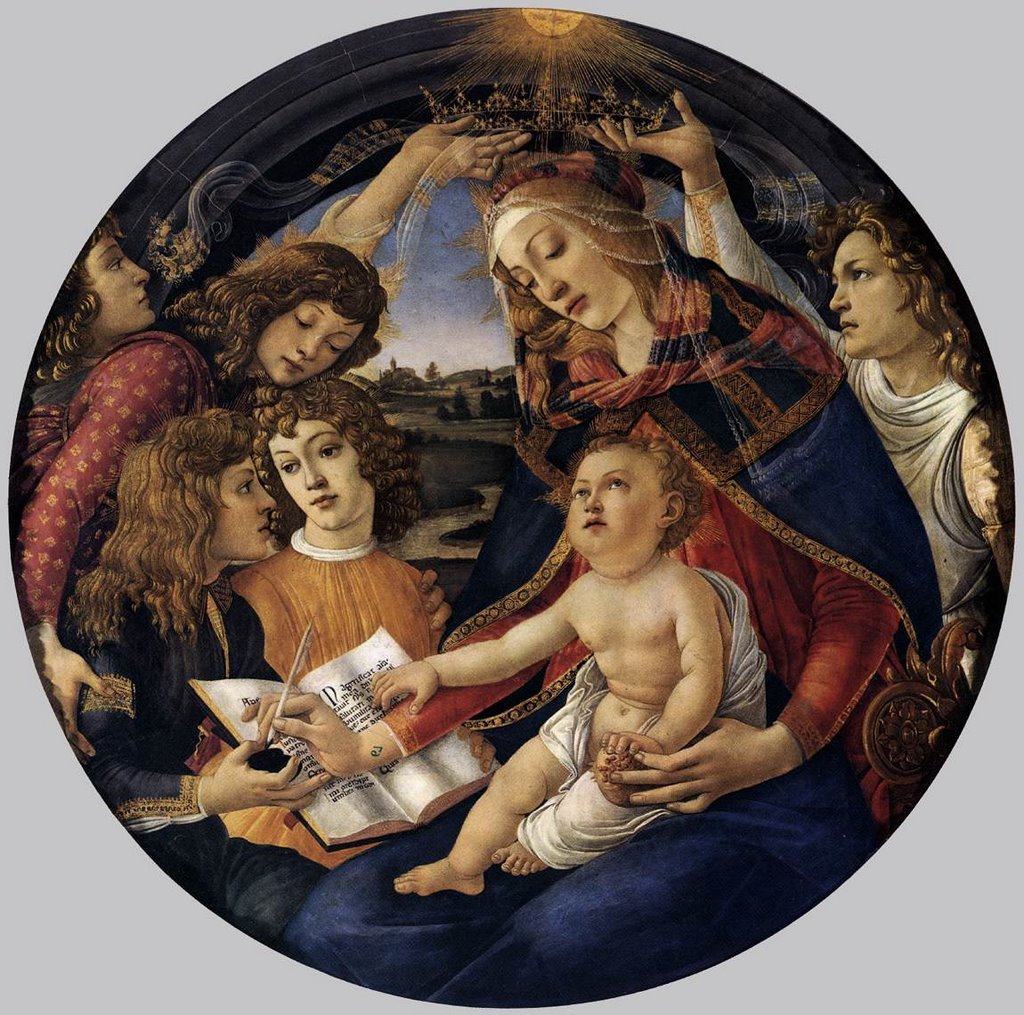
Showing posts with label love. Show all posts

Friday, March 29, 2024

Hope and Love – Finding Meaning in Suffering

Is there any meaning in suffering? Or is it all pointless and an occasion for nothing but anguish and despair?

One of the readings for Good Friday is from Isaiah ch. 52-53 about the "Suffering Servant," and there is this line "the Lord was pleased to crush him in infirmity." The Suffering Servant is one of the Old Testament messianic passages that foreshadow Jesus Christ, who by and through love took suffering upon Himself and, as we find on Easter Sunday, by that love transformed death to life.

On Good Friday a few years ago, the day of the Passion of Jesus, I spent much of the day at the hospital watching R as she slept, and I could not help but think -- Can anyone seriously deny that she has shared in the Passion of Jesus? More than merely "carrying a cross" of everyday hardship, she had been a suffering servant, crushed in infirmity.

She had, over the years, multiple broken bones merely from something as common as walking or getting up; knee replacements, hip replacements; kidney failure, poisoned by painkillers, necessitating a kidney transplant; a perforated bowel during a routine procedure; nausea and pain, pneumonia; an vicious attack of MSRA which ravaged her lungs; congestive heart failure; and on and on.  Too many hospitalizations to count; an entire drug store of medications to take every day.

All this suffering, anxiety and agony in the garden – although innocent of wrongdoing and undeserving of such suffering, being dragged before the (medical) authorities for examination, the scourging of her body, being made to carry a cross, stumbling and falling because of the heavy weight, now having her hands pierced with needles as if nails, her body fixed in the bed as if a cross, hanging there suffering and laboring to breathe, and then having her side pierced. Meanwhile, we who love her could do little but watch as she proceeded down her Via Dolorosa, and stand there at the foot of her cross.

This is not to suggest that R is Jesus, but it is abundantly clear that, in all these things, R shared in the Passion of Jesus. God had not abandoned her, even though, like Jesus, she had asked if He had, because she was where He is. And it was in her sharing in His passion, in His suffering, that she also shares in the love of His Redemption.

Perhaps there can be meaning in such awful, horrible, enormously unwanted suffering. Perhaps it need not be meaningless and pointless and emptiness. Perhaps it need not be despair and hopelessness. Perhaps we can find here the meaning of redemptive suffering, of accompanying Jesus, of going beyond even Simon the Cyrenian who was pressed into the service of carrying the Cross.

St. Paul said, "In my flesh I am filling up what is lacking in the afflictions of Christ" (Col. 1:24). Again, can it be denied that this too speaks of R? In this redemptive suffering, in heroically enduring all of this with remarkable grace – all this pain, all these afflictions one after another after another after another – participating in the work of salvation by sharing in the undeserved suffering of Jesus, she was joined to Him far more that we are joined to Him by prayer.

True, it is not a "blessing" that anyone would really seek out, and is one that we would all rather God had taken away, we would all rather that she never have gone through that "hell" in the first place. But as difficult as it was to endure, and it was extremely difficult, being joined to Him nevertheless provided a measure of hope, rather than despair.  Suffering is inevitable in this world, but it need not be pointless and emptiness. We can find meaning, positive meaning -- the meaning of hope.

R survived that trial by fire, the latest in too many.  She should have died.  She very, very nearly did.  She should have been dead many times over by then.  She very nearly was.  But she survived.  Through much anguish, she endured.  She persevered.

Her lungs began to heal, new tissue grew.  She got out of that bed.  She walked.  She smiled, she laughed.  She rejoiced.  She was happy.

What saved her, what gave her the hope to go on was love.  Not the fairy-tale love of sunshine and happily-ever-after feelings, which come and go, but authentic love in all its manifestations, all of its ups and downs, all of its trials and tribulations.  As she demonstrated with her life, it is love which sustains us, love which heals us, love which saves us, love which gives us life.

It is only love and through love that we can have life, real life, the fullness of life.  By R’s faith, she understood that it is by the creative power of love that the universe was made.  And it was in the transformative power of love that fear was overcome and hope was found in the midst of hardship and suffering.  That is what sustained and healed her.

First, her own love, which among other things gave her a fierce determination to persevere, to keep on going through the worst hell imaginable, time and again.  The MSRA which savaged much of her lung tissue really did try to kick her ass, but she hung in there because her ass is mighty tough.  She is one tough mama.  This tiny little nearly 70-year-old woman is without a doubt the strongest person I know.  And she has given me one of the greatest life lessons I’ll ever learn.

Much of that strength was from her own loving spirit and stubborn will, but not all of it. She also had help to endure and fight.  Her body and doctors had help in healing that body, in comforting that mind.  And here is proof of the power of grace.  Grace, which is just another word for the healing power of love from the One who is Love, and also the power of prayer.

God’s love and our love.  Now, through her younger years, before the experience of Job fell upon her, R was not particularly super-religious, at least I did not think so.  But during the times of her afflictions, many times she would speak of feeling our prayers for her, gaining strength from them.  God, who is Love, would receive the love that we would each express in our prayers and in our actions, and He would multiply our love by His own, completely and perfectly, to give it all to her by His grace.

It doesn’t take a lot, just a spark, just an ember of love is enough.  Because of transformative and healing love, beyond the Passion, beyond our compassion of suffering with her rather than running away from it, there is new life.

Love passes through eternity, and it is love which gave her and gives us hope. It is love which sustains us, love which heals us, love which saves us, love which gives us life.

Sunday, October 07, 2012

We were Made for a Fullness of Love That is by its Very Nature Unitive and Fruitful

The Mass readings for today, which happens to be Respect Life Sunday, answer the questions that have been asked since the beginning: Why do we exist? What is the meaning of life?

Philosophers and men and women of all stripes have struggled with those questions, but the answer is quite simple and reveals itself to be rather obvious once it is known -- the meaning of human life is to love and be loved in truth, more particularly, not an impoverished love or partial truth, but in the fullness of love and truth.

This answer proves itself to be clear when we consider our own personal experience and observe our own bodies, made male and female, such that even non-believers should be able to understand it. But for those of use who are believers, we have the benefit of the answer being further enlightened by the divine revelation contained in today's readings, which include passages that Blessed Pope John Paul II referred to extensively in presenting the theology of the body. I will not here repeat that teaching, which we have been considering recently over at Cinema Catechism, but will instead invite you to read the following previous posts:

The Existence and Nature of Man and the Meaning of Life
Having a Spousal Relationship with Christ
Beyond Salvation: Becoming One with the Lord
St. Thérèse and Our Relationship with the Lord
Respect for Human Life and Contraception: An Application of Theology of the Body
The Theology of the Body is a Theology of the Fullness of Love

See also - The Church's Positive Teachings on Human Sexuality, Contraception, and Life Issues
The Lie that is Contraception and the Truth of Authentic Feminism

Sunday, May 13, 2012

Our Mother Mary: a Woman of Hope, a Woman of Faith, a Woman of Love

Encyclical Letter Deus Caritas Est
His Holiness Pope Benedict XVI
Solemnity of the Nativity of the Lord, December 25, 2005
41. Outstanding among the saints is Mary, Mother of the Lord and mirror of all holiness. In the Gospel of Luke we find her engaged in a service of charity to her cousin Elizabeth, with whom she remained for “about three months” so as to assist her in the final phase of her pregnancy.

Magnificat anima mea Dominum”, she says on the occasion of that visit, “My soul magnifies the Lord.”

In these words she expresses her whole program of life: not setting herself at the center, but leaving space for God, who is encountered both in prayer and in service of neighbor—only then does goodness enter the world. Mary's greatness consists in the fact that she wants to magnify God, not herself. She is lowly: her only desire is to be the handmaid of the Lord. She knows that she will only contribute to the salvation of the world if, rather than carrying out her own projects, she places herself completely at the disposal of God's initiatives.

Mary is a woman of hope: only because she believes in God's promises and awaits the salvation of Israel, can the angel visit her and call her to the decisive service of these promises.

Mary is a woman of faith: “Blessed are you who believed”, Elizabeth says to her. The Magnificat — a portrait, so to speak, of her soul — is entirely woven from threads of Holy Scripture, threads drawn from the Word of God. Here we see how completely at home Mary is with the Word of God, with ease she moves in and out of it. She speaks and thinks with the Word of God; the Word of God becomes her word, and her word issues from the Word of God. Here we see how her thoughts are attuned to the thoughts of God, how her will is one with the will of God. Since Mary is completely imbued with the Word of God, she is able to become the Mother of the Word Incarnate.

Finally, Mary is a woman who loves. How could it be otherwise? As a believer who in faith thinks with God's thoughts and wills with God's will, she cannot fail to be a woman who loves. We sense this in her quiet gestures, as recounted by the infancy narratives in the Gospel. We see it in the delicacy with which she recognizes the need of the spouses at Cana and makes it known to Jesus. We see it in the humility with which she recedes into the background during Jesus' public life, knowing that the Son must establish a new family and that the Mother's hour will come only with the Cross, which will be Jesus' true hour.

When the disciples flee, Mary will remain beneath the Cross; later, at the hour of Pentecost, it will be they who gather around her as they wait for the Holy Spirit.

42. The lives of the saints are not limited to their earthly biographies but also include their being and working in God after death. In the saints one thing becomes clear: those who draw near to God do not withdraw from men, but rather become truly close to them.

In no one do we see this more clearly than in Mary. The words addressed by the crucified Lord to his disciple—to John and through him to all disciples of Jesus: - “Behold, your mother!” (Jn 19:27) - are fulfilled anew in every generation. Mary has truly become the Mother of all believers.

Men and women of every time and place have recourse to her motherly kindness and her virginal purity and grace, in all their needs and aspirations, their joys and sorrows, their moments of loneliness and their common endeavours. They constantly experience the gift of her goodness and the unfailing love which she pours out from the depths of her heart. The testimonials of gratitude, offered to her from every continent and culture, are a recognition of that pure love which is not self- seeking but simply benevolent.

At the same time, the devotion of the faithful shows an infallible intuition of how such love is possible: it becomes so as a result of the most intimate union with God, through which the soul is totally pervaded by him — a condition which enables those who have drunk from the fountain of God's love to become in their turn a fountain from which “flow rivers of living water” (Jn 7:38).

Mary, Virgin and Mother, shows us what love is and whence it draws its origin and its constantly renewed power. To her we entrust the Church and her mission in the service of love:
Holy Mary, Mother of God, you have given the world its true light, Jesus, your Son – the Son of God. You abandoned yourself completely to God's call and thus became a wellspring of the goodness which flows forth from him.

Show us Jesus. Lead us to him. Teach us to know and love him, so that we too can become capable of true love and be fountains of living water in the midst of a thirsting world
.

Sunday, March 04, 2012

God of Love and Human Sacrifice, Abraham and Isaac

At Mass this Sunday, we heard one of the more troubling passages of scripture, that concerning God asking Abraham to offer Isaac as a sacrifice. Many people are troubled by this, asking how could God ask this if He is supposedly so loving and good?

There are some basic principles one needs to keep in mind if one wants to properly understand a given passage from scripture. You cannot read the passage in isolation, but must read it in the context of the entirety of the Bible, especially in light of Jesus Christ (indeed, this is one of the lessons of the Transfiguration, which was the Gospel reading, where Moses, representing the Law, and Elijah, representing the prophets, appear with Jesus, the Word), as well as in the context of the historical context of the time and place in which the passage was written, including extra-biblical history.

The book of Genesis informs us that, in opposing God, who is Life, man necessarily brings death upon himself. The result of Original Sin is that a wide gulf of separation between God and humanity was created, a separation between man and love, truth, and life. And not only are proper relationships between mankind and God severed, but, as we see with Adam turning against Eve, and Cain killing Abel, proper relationships between human beings themselves are estranged, so that, instead of living a life of love and truth toward others, mankind has lived a life of selfish self-gratification and exploitation of others; instead of harmony, there is discord.

Now God, who is Divine Mercy, knew this rupture would happen. God knew that His covenant of love with Adam would be broken, and He already had a plan for reconciliation. This process of God calling humanity back to Himself is called “salvation history,” and this plan of redemption was to establish a relationship with a specific people and develop them so that they could learn to know God and live according to His will of love and truth.

Salvation History was necessarily a gradual process, given that humanity had lost almost all understanding of God after the Fall, such that mankind believed all sorts of false ideas about God and had adopted all sorts of evil ways. Thus, we see the text of the Old Testament moving from the more vague and ambiguous (as viewed from a modern perspective) to the more specific as it draws closer to the time of Jesus.

Also, and most importantly in interpreting and understanding those "hard" passages in scripture, we must understand that, in leading mankind back to the truth of Himself, God necessarily dealt with mankind as it was at that particular time, that is, in the fallen, ignorant, and evil state of that era, using terms and images and concepts that such a harsh and blood-thirsty humanity would understand.

As part of this process, God established the great covenant with Abraham to set apart a people to be His own. (Gen. 12, 17) To show that He was not merely the god of a particular place, as was believed to be the case by the polytheists of the time, but that He is the One God who is Lord everywhere, God told Abraham (then called Abram) to leave his home in Ur (present day southern Iraq) and go to a far land, Canaan (present day Israel), which would be given to him and his descendents. To demonstrate this covenant with Abraham and his descendents, the sign of the covenant, circumcision, was made on the instrument of procreation. Through these chosen people, God would bring salvation to all mankind.

At this time in human history, not only was polytheism widely practiced, but human sacrifice was a part of some of those religions.

In order for Abraham (and we) to fully understand the gravity of the situation, and so that he could demonstrate and prove (to himself) that he had total faith in the Lord, even to the point of being willing to sacrifice his beloved son Isaac, God followed the expectations of the times and told Abraham to offer him in sacrifice, which Abraham dutifully prepared to do. (Gen. 22)

God did not test Abraham in order for God to know the extent of his fidelity, the omniscient God already knew. Rather, God tested Abraham so that Abraham would know that he was so faithful that he was willing to sacrifice his own son, whom he loved. God does ask us to put our love for Him before our love for others. However, God does not, in fact, desire human sacrifice; He desires mercy and a loving heart (Hos. 6:6). And in loving God before loving others, even our own family, we actually end up providing even more love, and even more perfect love, to others.

In order to graphically demonstrate that He does not desire human sacrifice (and wanted the widespread practice to end), God had Abraham proceed to the brink of sacrificing Isaac only so that He could then stop him. Neither Abraham nor any other member of mankind would be asked for such a sacrifice. Instead, as Abraham told Isaac, God Himself would provide for the sacrifice, as He also did in providing Himself as the Lamb of God -- the same Lamb of God whose Immaculate Mother, Our Lady of Guadalupe, would appear to the lowly Juan Diego many years later to end the culture of human sacrifice by the Aztecs.

So, what we should take away from the story of the testing of Abraham, of God asking him to offer up Isaac as a sacrifice is NOT that God is cruel, but quite the opposite -- God is Love -- He does not desire human sacrifice; He desires mercy and a loving heart (Hos. 6:6). As Joseph Cardinal Ratzinger (now Pope Benedict) writes --
A misunderstood theology has left many people with a completely false image, the image of a cruel God who demands the blood of His own Son. They have read out of the Cross the image of Job's friends and have turned their backs on this God in horror. But the opposite is true! The biblical God demands no human sacrifices. When He appears in the course of the history of religion, human sacrifice ceases. Before Abraham can slaughter Isaac, God speaks and stops him; the ram takes the place of the child. The cult of Yahweh begins when the sacrifice of the firstborn, which was demanded by the ancestral religion of Abraham, is replaced by his obedience and his faith -- the external substitute, the ram, is only the expression of this deeper reality, which is not a replacement, but rather looks ahead to the future fulfillment. For the God of Israel, human sacrifice is an abomination; Moloch, the god of human sacrifices, is the embodiment of the false god who is opposed by faith in Yahweh. For the God of Israel, it is, not the death of a man, but his life that is the act of worship. Irenaeus of Lyons expressed this in the wonderful formula: "Gloria Dei homo vivens" (The living man in the glorification of God.) And this is the kind of "human sacrifice," of worship, that God demands. (The God of Jesus Christ, pp. 54-55 (1976)
God does not delight in holocausts. He neither needs nor wants animal sacrifices, He neither needs nor wants grain (cereal) sacrifices, even though He had provided certain regulations for both types of sacrifice. What use has God for burnt animal flesh or grain?

So why the long history of animal and grain sacrifice, as recounted in the Old Testament?

It would appear that it was merely preparatory for the real sacrifice that is desired by God -- He who is Love. What the God of Love desires is love -- we were made by love, out of love, for love. And love, true and complete love, is necessarily sacrificial -- one sacrifices himself for the sake of the other, one gives of himself and puts the other before himself and his wants; he does not use the lives of others or otherwise sacrifice them for his own gain.

This sacrifice of self in love is the sacrifice that God desires. The sacrifice He desires is not that of an animal's life, not that of our children, but of our own; the blood sacrifice He desires is not the blood of an animal, but our "blood," that is, our own life, that is, our spirit -- a sacrifice of love. Just as He sacrificed His own Precious Blood and poured out His Spirit upon us, so too does He ask this of us. God desires it, but does not command it, because love, by it's very nature, is something that must be freely given.

The sacrifice that is desired by God and is acceptable to Him is the sacrifice of self, the sacrifice of a pure and contrite heart, renouncing prior infidelities and giving one's life back to Him who made it, placing one's self at the service of God. That is, loving the Lord thy God with all thy heart and all thy soul and all thy mind and all thy strength, and loving one another as He has loved us.

Sunday, February 19, 2012

Contraception - A Violation of the Total Love in a Communion of Persons that is True Conjugal Love

The Truth of the Encyclical Humanae Vitae
by Karol Cardinal Wojtyla, Archbishop of Krakow, Poland
as published in L'Osservatore Romano
Weekly Edition in English
16 January 1969, page 6
A Testimony

It will seem strange that we begin our thoughts about the encyclical Humanae Vitae with quotations from the Autobiography of M. Gandhi. "In my opinion," wrote the great Indian,
"to maintain that the sexual act is a spontaneous action analogous to sleeping or eating, is crass ignorance. The existence of the world depends upon the act of multiplying—upon procreation, we say—and since the world is the dominion of God and a reflection of his power, the act of multiplying—of procreation, we say—must be subjected to the norm which aims at safeguarding (the development of life on earth). The man who is aware of all this, will aspire at all costs to dominate his senses and will furnish himself with the necessary knowledge to promote the physical and spiritual growth of his offspring. He will then pass on the fruits of this knowledge to posterity as well as using them for his own advantage."
In another passage from his autobiography, Gandhi says that twice in his life he was influenced by the propaganda for artificial means of contraception in conjugal life. However he arrived at the conviction that "one must act primarily through interior force, in the mastery of oneself, that is through self-control."

With regard to the encyclical Humanae Vitae, these passages from the Autobiography of Gandhi take on the significance of a special testimony. They make us recall the words of Saint Paul in the Epistle to the Romans, concerning the substance of the Law inscribed in the heart of man and demonstrated by the dictates of an upright conscience (Rom. 2, 15). Even in the times of Saint Paul, the voice of an upright conscience was a reproach for those who, even though "possessors of the Law", did not observe it.

Perhaps it is also good for us to have before our eyes the testimony of this non-Christian man. It is appropriate for us to be aware of "the substance of the Law" written in the heart of man and demonstrated by the conscience, in order to be able to penetrate the profound truth of the doctrine of the Church contained in Paul VI's encyclical Humanae Vitae. For this reason, at the beginning of our thoughts, which aim at clarifying the ethical truth and the objective foundation of the teaching of Humanae Vitae, we have used such a testimony. The fact that this testimony historically precedes the encyclical by a few decades does not lesson its significance: in fact, the essence of the problem remains the same in both, and even the circumstances are quite similar.

The True Meaning Of Responsible Parenthood

In order to answer the questions presented at the beginning of the encyclical (H.v. 3), Paul VI analyzes the two great and fundamental "realities of married life", conjugal love and responsible parenthood (H.v. 7), in their mutual relationship. The analysis of responsible parenthood constitutes the principal theme of the encyclical since the questions posed at the beginning present this problem:
"Could it not be admitted, that is, that the intention of a less abundant but more rationalized fecundity might transform a materially sterilizing intervention into a licit and wise control of birth? Could it not be admitted, that is, that the finality of procreation pertains to the ensemble of conjugal life, rather than to its single acts? ... has not the moment come for him to entrust to his reason and his will, rather than to the biological rhythms of his organism, the task of regulating birth?" (H.v. 3).
To answer these questions the Pope does not resort to the traditional hierarchy of the purposes of marriage of which the first is procreation, but instead he analyzes the mutual relations between conjugal love and responsible parenthood. This is the same formulation of the problem as that contained in the pastoral Constitution Gaudium et spes.

A correct and penetrating analysis of conjugal love presupposes an exact idea of marriage itself. Marriage is not "the product of unconscious natural forces" (H.v. 8), it is "the communion of beings" (H.v. 8) based on their reciprocal gift of self. And for this reason a correct judgment of responsible parenthood presupposes "an integral vision of man and of his vocation" (H.v. 7).

To acquire such a judgment, "the partial perspectives—whether of the biological, psychological, demographic or sociological orders" (H.v. 7) are not at all sufficient. None of these views can constitute a basis for an adequate and just answer to the questions posed above. Every answer that comes from a partial view can only be a partial one.

In order to find an adequate answer, it is necessary to have a correct vision of man as a being, since marriage establishes a communion of beings which is born and brought about through their mutual gift of self. Conjugal love is characterized by the elements which result from such a communion of beings and which correspond to the personal dignity of the man and the woman, of the husband and the wife. It is a matter of total love, or love which involves the whole man,: his sensitivity, his affectivity, and his spirituality, which must be both faithful and exclusive. This love "is not exhausted in the communion between husband and wife but it is destined to continue raising up new lives" (H.v. 9); it is therefore fruitful love.

This loving communion of a married couple, through which they constitute, according to the words of Genesis 2, 24, "a single body" is a kind of condition of fecundity, a condition of procreation. This communion being a particular type — since it is corporeal it is in the strict sense "sexual" — of the realization of the conjugal communion between beings, must be brought about at the level of the person and must befit his dignity. It is on this basis that one must form an exact judgment of responsible parenthood.

This judgment concerns, first of all, the essence of paternity — and under this aspect it is a positive judgment: "conjugal love requires in husband and wife an awareness of their mission of responsible parenthood . . . " (H.v. 10). The encyclical throughout its text formulates this judgment and proposes it as a basic answer to the questions posed above: conjugal love must be fruitful love, that is, "directed toward parenthood". Parenthood which comes from love between persons is "responsible parenthood". One could say that in the Encyclical Humanae vitae responsible parenthood becomes the proper name for human procreation.

This basically positive judgment of responsible parenthood, however, requires some further explanation. It is only through these further explanations that we can find a universal answer to the initial questions. Paul VI offers us these explanations. According to the encyclical, responsible parenthood means "both... the deliberate and generous decision to raise a numerous family, and... the decision... to avoid for the time being or for in indeterminate length of time, a new birth" (H.v. 10). If conjugal love is fruitful love, that is, open to parenthood, it is difficult to think that the meaning of responsible parenthood, deduced from its essential properties can be identified only with the limitation of birth. Thus responsible parenthood is realized both by those couples who, thanks to their generous and meditated decision, produce a large family, as well as by those couples who for "grave motives and with due respect for the moral law" (H.v. 10) decide to limit the number of their offspring.

According to the doctrine of the Church, responsible parenthood is not and cannot be only the effect of a certain "technique" of conjugal collaboration: in fact, it has primarily and "per se" an ethical value. A true and fundamental danger — to which the encyclical purports to be a providential remedy — consists in the temptation to consider this problem as being outside the sphere of ethics, to make an effort to divest man of the responsibility for his own actions which are so profoundly rooted in his entire personal structure. Responsible parenthood — writes the Pope — "means the necessary dominion which will and reason must exercise" over the tendencies of instinct and passion (H.v. 10). Thus this domination presupposes "the knowledge and respect of the biological processes" (H.v. 10) and this places these processes not only in their biological dynamism, but also in their personal integration, that is, at the level of the person, since "the human intellect discovers in the power of giving life biological laws which are part of the human person" (H.v. 10).

Love is the communion of persons. If parenthood and responsible parenthood correspond to this love, then the way of acting which leads to such parenthood cannot be morally indifferent. In fact, it decides whether the sexual activity of the communion of persons is or is not authentic love. "By safeguarding both these essential aspects, the unitive and the procreative, the conjugal act preserves in its fullness the sense of true mutual love..." (H.v. 12).

Man "cannot of his own initiative break the inseparable connection between the two meanings of the conjugal act: the unitive meaning and the procreative meaning" (H.v. 12). It is for this reason that the encyclical supports the previous position of the Magisterium and maintains the difference between the so-called natural regulation of birth which calls for periodical abstinence and contraception which uses artificial methods. We use the word "maintains" because "the two cases are completely different from each other" (H.v. 16). There is a great difference between them with regard to their ethical qualification.

The encyclical of Paul VI as a document of the supreme Magisterium of the Church presents the teaching of the human and Christian ethic in one of its key points. The truth of Humanae vitae is therefore primarily a normative truth. It reminds us of the principles of morality, which constitute the objective norm. This norm is even written in the human heart, as is demonstrated at least in the testimony of Gandhi which we quoted in the beginning of this article.

Nonetheless, this objective moral principle easily suffers from subjective deformations or common obscuring. On the other hand, many other moral principles such as those which were recalled in the encyclical Populorum Progressio have met a similar fate. In the encyclical Humanae vitae, the Holy Father expresses above all his full understanding of all these circumstances which seem to speak out against the principle of conjugal morality as taught by the Church. The Pope is also aware of the difficulties to which modern man is exposed, as well as the weaknesses to which he is subject. However, the path towards the solution of the problems must be through the truth of the Gospel: "To diminish in no way the saving teaching of Christ constitutes in eminent form of charity for souls" (H.v. 29). The motive of charity towards souls and no other motive moves the Church which "does not cease... to proclaim with humble firmness the entire moral law, both natural and evangelical" (H.v. 18).

A Correct Hierarchy Of Values

The normative truth of Humanae vitae is strictly tied to those values which are expressed in the objective moral order according to their proper hierarchy. These are the authentic human values which, are connected with conjugal and family life. The Church considers herself the custodian and guarantor of these values as we read in the encyclical. In the face of any danger which threatens them the Church feels it her duty to defend them. The authentic human values constitute the basis and at the same time the motivation of the principles of conjugal morality mentioned in the encyclical. It is useful to emphasize them once again even though they have already been demonstrated in the preceding discussions, and the matter is quite clear, since the true meaning of responsible parenthood was already expressed in the encyclical in relation to conjugal love.

The value which is at the foundation of this demonstration is the value of human life, that is, of that life already conceived and blossoming in the living together of the married couple. The responsibility of parenthood, to which the entire encyclical is principally dedicated, itself speaks of this value.

The fact that this value of life already conceived or in its origin, is not examined in the encyclical within the framework of procreation as the purpose of marriage, but rather within the vision of the love and the responsibility of the partners, places the value of human life itself in a new light. Man and woman in their matrimonial life together which is a living together of persons, must create a new human person. The conceiving of a person by means of persons — this is the just measure of values which must be used here. This is, at the same time, the just measure of the responsibility which must guide human parenthood.

The encyclical recognizes this value. Even though the encyclical does not seem to speak of this value very much, nevertheless it indirectly emphasizes it even more when it places it firmly within the context of other values. These are the fundamental values for human life and, at the same time, the specific values for marriage and the family. They are specific because only marriage and the family — and no other human environment — constitute the specific field in which these values appear. They are the fertile soil in which they grow. One of these is the value of conjugal and family love, the other is the value of the person, or his dignity which is manifested in the closest and most intimate human contacts.

These two values permeate each other so completely that in a certain sense they constitute a single good. And this is the spiritual good of marriage, the greatest wealth of the new human generations:
"...husband and wife fully develop their personalities, being enriched with spiritual values. Such discipline bestows upon family life fruits of serenity and peace... it favours attention for one's partner, helps both parties to drive out selfishness, the enemy of true love; and deepens their sense of responsibility. By its means, parents acquire the capacity of having a deeper and more efficacious influence in the education of their offspring; little children and youths grow up with a just appraisal of human values, and in the serene and harmonious development of their spiritual and sensitive faculties" (H.v. 21).
This is the full context and at the same time the universal framework of the values upon which the doctrine of responsible parenthood is founded, the attitude of responsibility extends over the entire conjugal life and over the entire process of education. Only those who have reached the full maturity of their person through a complete education can succeed, in educating new human beings. Responsible parenthood and the chastity of the mutual relations between the married couple inherent in it are the verification of their spiritual maturity. Thus they project their light over the entire process of education which is carried out in the family.

The encyclical Humanae vitae contains not only clear and explicit norms for married life, conscious parenthood and a correct regulation of birth, but through these norms it indicates the values. It confirms their correct meaning and warns us against false meanings. It expresses a profound solicitude to safeguard man from the danger of altering the most fundamental values.

One of the most fundamental values is that of human love. Love has its source in God who "is Love." Paul VI places this revealed truth at the beginning of his penetrating analysis of conjugal love because it expresses the highest value which must be recognized in human love. Human love is rich in the experiences of which it consists, but its essential richness consists in being a communion of persons, that is of a man and a woman, in their mutual self-giving.

Conjugal love is enriched through the authentic giving of one person to another person. It is this mutual giving of self which must not be altered. If in marriage there is to be the realization of authentic love of persons through the giving of bodies, that is, through the "bodily union" of the man and the woman, then out of regard for the value of the love itself, this mutual gift of self cannot be altered in any aspect of the interpersonal conjugal act
.

Authentic Value of Human Love

The value itself of human love and its authenticity demand such a chastity of the marital act as is required by the Church and is repeated in the encyclical itself.

In various fields, man dominates nature and subordinates it to himself through the use of artificial means. The sum total of these means in a certain sense is equivalent to progress and civilization.

In this field, however, where love between one person and another is expressed through the marital act, and where the person must authentically give himself (and "give" also means "to receive" reciprocally) the use of artificial means is equivalent to an alteration of the act of love. The author of Humanae vitae is aware of the authentic value of human love which has God as its source, and which is confirmed by a correct conscience and a healthy "moral sense". It is precisely in the name of this value that the Pope teaches the principles of ethical responsibility. This is also the responsibility which safeguards the quality of human love in marriage. This love is also expressed in continence — even in periodic continence - since love is capable of giving up the marital act, but it cannot give up the authentic gift of the person. Renouncing the marital act can be in certain circumstances an authentic gift of self. Paul VI writes in this regard: "...this discipline which is proper to the purity of married couples, far from harming conjugal love, rather confers on it a higher human value" (H.v. 21).

In expressing the thoughtful concern for the authentic value of human love, the encyclical Humanae vitae addresses man and calls upon his sense of dignity as a person. In fact, love, according to its authentic value, must be realized by man and woman in marriage. The capacity for such love and the capacity for the authentic giving of self demand from both partners the sense of personal dignity. The experience of sexual value must be permeated by a vivid awareness of the value of the person. This value, in fact, explains the necessity for the mastery of oneself which belongs to the person: in fact, the personality is expressed in self-control and self-domination. Without these man would not be capable of giving himself nor of receiving that gift according to the measure of the value which must characterize such an interchange. And therefore the moral doctrine proclaimed by the Church contributes
"to the establishment of a truly human civilization; she engages man not to abdicate from his own responsibility in order to rely on technical means; by that very fact she defends the dignity of man and wife" (H.v. 18).
The encyclical Humanae vitae formulates this hierarchy of values which proves to be essential and decisive for the entire problem of responsible parenthood. This hierarchy cannot be overturned and the correct order of values cannot be changed. We would risk such an inversion and changing of values if, in order to resolve the problem, we were to take partial aspects as our point of departure rather than starting from "the integral vision of man and his vocation".

Each of these partial aspects is very important in itself, and Paul VI does not diminish their importance in the least; whether it be the demographic-sociological aspect or the bio-psychological aspect. On the contrary, the Pontiff carefully considers them. He only wishes to prevent any of the partial aspects — no matter what their importance — from destroying the correct hierarchy of values and from divesting love of its true significance as the communion of persons and from divesting man himself of his true significance as a person capable of authentic self-giving, a self-giving in which man cannot be substituted by "technology."

In all this, however, the Pope does not overlook any one of the partial aspects of the problem; as a matter of fact he confronts them, establishing their fundamental content and declaring the correct hierarchy of values. And it is precisely along this path that there exists a possibility of birth control and therefore also the possibility of resolving the socio-demographical difficulties. And therefore Paul VI was able to write with all certainty that "...public authorities can and must contribute to the solution of the demographic problem" (H.v. 23). When it is a matter of the biological or even the psychological aspects — as the encyclical teaches us — the path towards the realization of the respective values passes through the heightening of the value of love itself and of the person. Here are the words of the eminent biologist, professor P. P. Grasset of the Academy of Sciences: "The encyclical is in agreement with biological data, it reminds doctors of their duties and points out to man the way by which his dignity - both physical and moral - will not suffer any offence" (Le Figaro, 8-10-1968).

One might say that the encyclical penetrates the nucleus of this universal problem which had engaged the Second Vatican Council. The problem of the development "of the world" both in its modern demands and in its more distant perspectives leads to a series of questions which man poses to himself. Some of these are expressed in the pastoral Constitution Gaudium et spes. A correct answer to these questions is not possible if one does not realize the significance of those values which make man and his life truly human. In the encyclical Humanae vitae, Paul VI dedicates himself to the examination of these values in their central core.

Evangelic Profile

The examination of these values and through them the examination of the norm itself of responsible parenthood formulated in the encyclical Humanae vitae carry with them a particular stamp of the Gospel. It is important to point this out again at the conclusion of the present considerations, even though this very idea has been the connecting thread throughout. The questions which agitate modern man "required from the teaching authority of the Church a new and deeper reflection upon the principles of the moral teaching on marriage: a teaching founded on the natural law, illuminated and enriched by divine Revelation." Revelation as the expression of the eternal thought of God permits us, and at the same time commands us, to consider marriage as an institution for transmitting human life, in which the marriage partners are "the free and responsible collaborators of God the creator" (H.v. 1).

Christ Himself confirmed this perpetual dignity of married persons and He inserted the totality of married life into the work of the Redemption, and He included it in the sacramental order. By the sacrament of Marriage "husband and wife are strengthened and as it were consecrated for the faithful accomplishment of their proper duties, for the carrying out of their proper vocation even to perfection, and the Christian witness which is proper to them before the whole world" (H.v. 25). Since the doctrine of Christian morality was set forth in the encyclical, the doctrine of responsible parenthood, understood as the just expression of conjugal love and of the dignity of the human person, constitutes an important component of the Christian witness.

And it seems to us proper that for this witness, man must make a certain sacrifice for the sake of authentic values. The Gospel continually confirms the necessity of such a sacrifice, and it is confirmed by the work of Redemption which is expressed in its totality in the Easter Mystery. The cross of Christ has become the price of human redemption. Each man who walks along the path of true values must assume part of this cross as the price which he must pay in exchange for authentic values. This price consists in a particular effort: "The divine law, as the Pope writes, demands serious engagement and much effort", and he adds right after this that "...such efforts ennoble man and are beneficial to the human community" (H.v. 20).

The last part of the encyclical is in appeal for this serious engagement and these efforts which is addressed both to the human community, in order that it "create all atmosphere favourable to education in chastity" (H.v. 22), and to public authorities as well as men of science in order that they may succeed in "providing a sufficiently secure basis for a regulation of birth, founded on the observance of natural rhythms" of fertility (H.v. 24). The encyclical finally appeals to married persons themselves, to the apostolate of families for the family, to doctors, to priests and to bishops as pastors of souls.

For contemporary men who are restless and impatient and who are at the same time threatened in the sphere of their most fundamental values and principles, the Vicar of Christ recalls the laws which rule over this sphere. And since they lack patience and seek after simplifications and apparently easy solutions, he reminds them of the necessary price for true values and of how much patience and effort are necessary for the realization of these values.

It seems that throughout all the arguments and appeals of the encyclical which are full of dramatic tension, we can hear the words of the Master: "by your endurance you will gain your lives" (Luke 21, 19). For in the last analysis that is precisely the point.
.

Sunday, November 06, 2011

"The Bridegroom is coming."

In Act Two of his play, The Jeweler's Shop, Blessed Karol Wojtyla tells the story of Anna, whose marriage to Stefan began with promise, but has turned to the bitterness of disappointment and disillusionment. They have become like strangers in the same house, and she believes that their love is dead. But the mysterious jeweler will not take her wedding ring when she tries to sell it -- her husband still being alive, her ring alone does not weigh anything when he places it on his scales, which "weigh not the metal, but man’s entire being and fate." Ashamed, but still desperate for love, she leaves the jeweler's shop and meets a "chance interlocutor" who speaks to her of the Bridegroom who is coming.

In the parable of the Bridegroom and the Ten Virgins, which is the Gospel reading at Mass for this Sunday (Mt 25:1-13), we usually think of its lesson of constant readiness, but Pope John Paul uses it to add a couple of insights to our understanding of love.


Adam – I told Anna, “The Bridegroom will come shortly.” I said this thinking of the love which had so died in her soul. The Bridegroom passes through so many streets, meeting so many different people. Passing, he touches the love that is in them. It if is bad, he suffers for it. Love is bad when there is a lack of it. . . .

Anna – Isn’t what one feels most strongly the truth? . . . Is not love a matter of the senses and of a climate which unites and makes two people walk in the sphere of their feeling?
Adam, however, did not fully agree with this. Love is, according to him, a synthesis of two people’s existence which converges, as it were, at a certain point, and makes them into one. And then again he repeated that the Bridegroom would walk down this street shortly. This news, heard for the second time, not only fascinated me, but suddenly awoke a longing in me. A longing for someone perfect, for a man firm and good, who would be different from Stefan -- different, different . . . And with the feeling of this sudden longing, I must have started running, looking closely at the men I passed.

[Anna begins to encounter various men passing by.]

Adam – This is just what compels me to think about human love. There is no other matter embedded more strongly in the surface of human life, and there is no matter more unknown and more mysterious. The divergence between what lies on the surface and the mystery of love constitutes precisely the source of the drama. It is one of the greatest dramas of human existence. The surface of love has its current – swift, flickering, changeable. A kaleidoscope of waves and situations full of attraction. This current is sometimes so stunning that it carries people away – women and men. They get carried away by the thought that they have absorbed the whole secret of love, but in fact, they have not yet even touched it. They are happy for a while, thinking that they have reached the limits of existence and wrested all its secrets from it, so that nothing remains. That’s how it is: on the other side of that rapture, nothing remains, there is nothing left behind it. But there can’t be nothing, there can’t! Listen to me, there can’t. Man is a continuum, a totality and a continuity – so it cannot be that nothing remains! . . .

Anna – [meets a second passerby] I was almost ready to cling to his arm . . . I longed so much for a man’s arm and a walk along the avenue of wilting chestnut trees. He went on to say, “How about stepping into that club?” . . . “And then?” I asked. He did not reply, and I seemed to take fright at that “then.” He must have had a wife . . . Suddenly, I realized what the expression “a casual woman” could mean. . . . I kept walking, however, still thinking about the same thing, coming forward, as it were, toward every passing man. . . .
Now I’m on the edge of the pavement. On the curb.... There’s a car; an expensive one. The window is partly lowered, a man at the wheel. I stopped.

Adam – Love is not an adventure. It has the taste of the whole man. It has his weight. And the weight of his whole fate. It cannot be a single moment. Man’s eternity passes through it. That is why it is to be found in the dimensions of God, because only He is eternity. . . .

Anna – I stopped and fixed my eyes on the car, the windows, the man. . . . The man looked. I approached. He had a low, warm voice when he said, “Won’t you join me?” He indicated the seat next to him. In a while, he will start the engine. We shall move off. We’ll drive into the unknown. . . . I shall be somebody again. . .
I want to, I think I want to very much. I think I had already put my hand on the door handle. I only had to press it. Suddenly I felt a man’s hand on mine. I looked up. Adam was standing above me. I saw his face, which was tired; it betrayed emotion. Adam looked me straight in the eyes. His hand was just lying on mine. Then he said, “No.” I felt the car moving past us. In a moment, it was gone. “It’s strange that you should come back; I thought you’d disappeared for good.”

Adam – I came back to show you the street. It is strange. Not because it is full of shops, neon lights and buildings, but because of the people. Look, on the other side of the street there are some girls passing by; they are walking, laughing and talking loudly among themselves. . . . Their lamps are out, so they are on their way to buy some oil. They will fill the lamps, and the lamps will burn again. . . .
They are the wise virgins.... And now look over there. Those are the foolish virgins. They are asleep and their lamps are lying by the wall. One has even rolled across the pavement and fallen into the gutter. To you it seems they are asleep in those recesses, but in reality, they too are walking down the street. They are walking in their sleep. They are walking in a lethargy – they have a dormant space in them.
You now feel that space in you, because you too were falling asleep. I have come to wake you. I think I am in time.

Anna – Why did you wake me? Why?

Adam – I’ve wakened you because the Bridegroom is to walk down this street. The wise virgins want to come forward and meet him with their lights; the foolish virgins have fallen asleep and lost their lamps. I promise you they will not wake in time, and even if they do, they will not be able to find and light their lamps. . . .
The Bridegroom is constantly waiting. He constantly lives in expectation. Only this is, as it were, on the far side of all those different loves without which man cannot live. Take you, for instance. You cannot live without love. I saw from a distance how you walked down this street and tried to rouse interest. I could almost hear your soul. You were calling with despair for a love you do not have. You were looking for someone who would take you by the hand and hug you.
Oh, Anna, how am I to prove to you that on the other side of all those loves which fill our lives, there is Love! The Bridegroom is coming down this street and walks every street! How am I to prove to you that you are the bride? One would now have to pierce a layer of your soul, as one pierces the layer of brushwood and soil when looking for a source of water in the green of a wood. You would then hear him speak: “Beloved, you do not know how deeply you are mine, how much you belong to my love and my suffering” – because to love means to give life through death; to love means to let gush a spring of water of life into the depths of the soul, which burns or smolders, and cannot burn out. Ah, the flame and the spring. You don’t feel the spring, but are consumed by the flame. Is that not so?

Anna – I don’t know. I only know that you have been talking to my soul. Don’t be afraid! It goes with my body. How can it be embraced or possessed without my body? I am a foolish virgin. I am one of the foolish virgins. Why did you wake me? …
There they are again, those girls. Their faces are not even attentive. Are they really pure and noble, or is it just that they have fared better in life than I? …

Adam – The Bridegroom is coming. This is his precise hour. Oh, look – the wise virgins have just gone by, holding their freshly lighted lamps. Their light is bright, because they have cleaned the glass in the lanterns. They walk gaily, almost dancing as they walk. . . .

Anna – I went on looking. A man was walking, dressed in a light coat, he was not wearing a hat. I did not notice his face at first, because he walked lost in thought, his head lowered. On impulse I began to walk in his direction. But when he lifted his face, I nearly gave a shout! It seemed to me I clearly saw Stefan’s face. And I immediately withdrew ... I have seen the face I hate, and the face I ought to love. Why do you expose me to such a test?

Adam – In the Bridegroom’s face, each of us finds a similarity to the faces of those with whom love has entangled us on this side of life, of existence. They are all in him.

[Act Three - several years later, during which Anna had begun the process of healing her marriage]

Adam – That evening I saw Anna again. The memory of her encounter with the Bridegroom was still vivid to her. Anna had entered the road of complementary love. She had to complement, giving and taking in different proportions than before. The turning point occurred that night many years ago. At that time everything threatened destruction. A new love could begin only through a meeting with the Bridegroom. What Anna felt of it at first was only the suffering. In the course of time a gradual calm came. And something new that was growing, was still intangible, and, above all, did not “taste” of love. One day they may learn to relish the taste of that something new . . .
_______________

Excerpts from The Jeweler's Shop (1960), translated by Boleslaw Taborksi (1980)
In our exegesis of scripture, we know the Bridegroom to be Christ, and His Bride is the Church. In many parables, we are the guests at the wedding banquet or the virgins awaiting the Bridegroom's arrival. But although the Bride is the Church and we appear to be bystanders, who is the Church?

We the faithful make up the Church. We are the Bride. You are the Bride. "Oh, Anna, how am I to prove to you that on the other side of all those loves which fill our lives, there is Love! The Bridegroom is coming down this street and walks every street! How am I to prove to you that you are the bride?" Each of us is the Bride that Jesus loves with such a fierce deep passion, if only we would realize it and accept it. “Beloved, you do not know how deeply you are mine, how much you belong to my love."

However, to be the Bride, one with Christ, means also to be one with His Passion. “Beloved, you do not know how deeply you are mine, how much you belong to . . . my suffering.” The spousal love of Jesus for us, and that we ought have for Him, passes through the Cross. But in that encounter of love comes not the death of love, but new life for our relationships of love with others. "A new love could begin only through a meeting with the Bridegroom."

At first, it may appear that there is only the suffering. But in the course of time, a transformation occurs, something new grows. At first, it may seem intangible and not have the “taste” of love that we are accustomed to. But in Him, in the Bridegroom, we can learn to relish the taste of that something new, the eternity and absolute of love.

(Cross-posted at Cinema Catechism)
.

Saturday, November 05, 2011

The Nature, Origin, and Cause of Love

(The following has been posted over at Cinema Catechism as a follow-up to an earlier post What is this thing called “love”? )

What is "love" and where does it come from?

Ultimately, love comes from God, who is Love, as do all things come from Him. But more immediately for the individual person, the question of "where" is illuminated by the question of "what." What is love? In its purest and truest and fullest, love is a gift, a gift of self, and it is something which is given unconditionally, without concern for whether the other "deserves" it, or what we may or may not receive in return, although it is a joy when it is reciprocated.

In recognizing that it is something selflessly given, not merely something experienced, we can also see that the immediate cause of love in us is our decision to give it. It is not something that overcomes us or is imposed upon us, or something that "just happens." That is, in the individual sense, love comes from our free choice of the will. And in choosing to love, in choosing to give of oneself, we ultimately are choosing to accept God, who is, after all, Love itself. Conversely, not loving is not something that "just happens," not loving is also a choice.

However, love in its fullest sense is not all about such agape love of noble self-sacrifice, which many might see as joyless duty, it is also about the brotherly, fraternal, friendship kind of love that is philia, as well as being about the love of purified eros, the thirsting kind of love that naturally seeks an “other,” a joyous, passionate, ascending, intimate kind of love, longing to be with the other.

And, as we have discussed in previous weeks and months, there is a spousal meaning in the human body, so we are all called to a spousal love that is both unitive and creative, as exemplified by husband and wife, God and Israel, Jesus and the Church, a loving communion of persons in one fruitful being. The fullness of love is, by its nature, dynamic and fertile, it bears fruit.

Still, in all of these, even in the attractive love of eros, there is an element of free choice. There is only one “love,” notwithstanding its multiple aspects and dimensions. And this is true whether it is love of a sweetheart or love of an enemy.
“Fundamentally, ‘love’ is a single reality, but with different dimensions; at different times, one or other dimension may emerge more clearly.” – Deus Caritas Est
If love were merely a positive feeling, then how could we love our enemy, whom we do not even like?
“Love is not merely a sentiment. Sentiments come and go. A sentiment can be a marvelous first spark, but it is not the fullness of love.” – Deus Caritas Est
The greatest gifts that God gave us in addition to our existence are reason, free will, and the capacity to love. We were created by God out of love, we were made through the Logos by an act of creative reason, and for love. Our purpose, the reason that we are here, is to love and be loved. Does it make sense that, in that area for which we are created, love, God would deprive us of those other gifts of reason and free choice of the will?

Love is not love if it is not freely given. Love is not love if it is not the fruit of a conscious decision. It may be suggested that love is a feeling, an emotion, an attraction, a desire for the other, a sense of fulfillment. And certainly these things often do accompany love, but they are not love in and of itself. Feelings come and go. Sentiments come and go. Attraction comes and goes. And yet love -- if it truly is love -- remains. Indeed, this is seen when Jesus tells us that we must love not only those close to us, but our neighbors, that is, total strangers we don’t even know, and even our enemies, people we don’t even like.

True love is not merely pleasure or sentiment. Love is more than just an emotional feeling, more than attraction and affection, and more than a desire for personal happiness or fulfillment. Love is a conscious, decisive choice of the other as the focus of affection, a commitment of the will to subordinate yourself, and to seek the good and welfare of the other, including the gift of yourself for the other’s benefit. In short, in all its aspects, love is a free choice.

And such a love is secure because it does not depend upon and is not contingent upon the other person -- it only depends on you.
“The ‘commandment’ of love is only possible because it is more than a requirement. Love can be ‘commanded’ because it has first been given [by God]. Some people object and say that love cannot be commanded, that it is ultimately a feeling which is either there or not, nor can it be produced by the will. However, God has loved us first and he continues to do so; we too, then, can respond with love. God does not demand of us a feeling which we ourselves are incapable of producing. In God and with God, I love even the person whom I do not like or even know. This can only take place on the basis of an intimate encounter with God, an encounter which has become a communion of will, even affecting my feelings.” – Deus Caritas Est
So, how do you love – truly love? You make a conscious decision, an act of the will, that you will love no matter what, freely and unconditionally. Love is a gift of self, accepting the person who is loved as they really are, without the merits of whether or not they “deserve” to be loved. And if you feel that you do not have that power within you, ask for a little help, which we call grace, from God.

The paradox of love. It is by having such a complete loving disposition toward gift of self that we are able to obtain a level of contentment and happiness that is permanent. It is another one of those curious paradoxes -- by sacrificing yourself, even your personal happiness and security, you gain an even greater happiness and security; by letting go of your self-centered ego, you find yourself; by emptying yourself, you become fulfilled. Agape and eros in one.

Such love is not all drudgery and duty, but leads to joy, real heart-soaring joy and contentment and fulfillment. The more that you are disposed to love, the better you are able to love and find love in male-female and other interpersonal relationships. The more you are disposed to love, the more you will be able to see the good qualities in others. These others become more physically attractive, more intelligent, more humorous, more enjoyable. Such a loving disposition is also something which approaches the divine.

Let us consider the love of God -- God is perfect; He is Truth itself. Therefore, the highest and most perfect and truest love is God’s love. And what kind of “love” is that? Deus caritas est. God is caritas; God’s love is love as caritas, charitable gift. God does not love us because we are attractive and pretty, funny and smart, or because we are so likeable. He loves us regardless of these things, and even in the absence of these things. He loves us, God gives Himself to us, even though we do not deserve it. He gives us His love because He seeks the good for us, because we need love. Love is life.

Indeed, if we were to honestly and justly consider the matter, we must concede that none of us "deserve" such love. After all, mankind has given God little more than rejection and infidelity throughout history. And yet, He continues to love us, fully, completely, and unconditionally. He refuses to stop loving us, even when we torture Him and murder Him. He continues to give.

But it is through the Cross that one attains the Resurrection. It is by and through the Lord's gift of self, first by becoming man, and then on the Cross, that "all things are made new." Love is by its very nature dynamic and fertile, it is life itself, and it is this fullness of love that has the power to transform dull and social lifelessness to a new life of authentic happiness, true ecstasy, and even bring new life into a love that which was once dead. But we, like He, must first choose to make that gift of self.

If we would have others love us, if we would seek to enjoy the joyous fruits of love for ourselves, we must love perfectly and truly as He loves. We must choose not to be selfishly focused on our own wants and desires by eating from the Tree of Knowledge, but must instead freely choose to eat from the Tree of Love.
___________________

See also the comment section below in What is this thing called “love”?
.

Tuesday, May 17, 2011

The Theology of the Body is a Theology of the Fullness of Love

While Blessed John Paul II, in his addresses on the Theology of the Body, spoke often of human sexuality, it is not so limited as to be a theology of sexuality. Rather, as Pope Benedict explains, it is more properly understood as a Theology of Love, which applies not only to sexuality, but the whole of understanding of who we are as human persons, beings made to love and be loved in fruitful communion in a multitude of relations, and especially with God.

Address of His Holiness Pope Benedict XVI
On the Occasion of the 30th Anniversary of the Establishment of the John Paul II Institute for Studies on Marriage and the Family

May 13, 2011
. . . The new Blessed, John Paul II, who as we recall was the object of an assassination attempt 30 years ago today, entrusted to you for study, research and dissemination his "Catecheses on Human Love," with his profound reflections on the human body.

Conjugating the theology of the body with the theology of love to find the unity of man’s journey: This is the theme that I would like to indicate as the horizon of your work.

Shortly after the death of Michelangelo, Paolo Veronese was called before the Inquisition, accused of having painted inappropriate figures in depicting the Last Supper. The painter replied that there were nude bodies with little reverence even in the Sistine Chapel. The Inquisitor who came to the defense of Michelangelo made the famous reply: "Don't you know that there is nothing but spirit in those figures?"

As modern men, we find it difficult to understand these words because the body appears to us as inert matter, almost dead weight, compared to knowledge and freedom which pertain to the spirit.

But the bodies painted by Michelangelo are inhabited by light, life, splendor. He wished to show in this way that our bodies conceal a mystery: that the spirit manifests itself and works in the body. And that physical bodies are called to become spiritual bodies, as St. Paul says (1 Cor. 15:44).

We can therefore ask ourselves: Can this destiny of the body illuminate the stages of its own journey? If our body is called on to be spiritual, should its story not be that of an alliance between body and soul?

In fact, far from being opposed to the spirit, the body is the place where the spirit may dwell. In light of this, it is possible to understand that our bodies are not just inert, heavy matter, but that they speak, if we know how to listen, the language of true love.

The first word of this language is found in the creation of man. The body speaks to us of an origin that we did not confer on ourselves. "You knit me together in the womb of my mother," says the Psalmist to the Lord (Ps 139:13).

We can affirm that the body, in revealing the Origin to us, bears in itself a filial meaning because it reminds us of our generation, which is derived through our parents, who transmitted life to us, from God the Creator. Only when he acknowledges this Original Love that gave him life is man able to accept himself - only then can he reconcile himself with nature and with the world.

The creation of Adam was followed by that of Eve. Flesh, received from God, makes possible the union of love between man and woman, and thus, to transmit life. The bodies of Adam and Eve, before the Fall, appeared to be in perfect harmony. Their bodies had a language they did not create, an eros rooted in their nature which invited them to receive each other mutually, from the Creator, so that they could give reciprocally.

We understand then how, in love, man is "re-created." Incipit vita nuova (a new life begins), Dante wrote (Vita Nuova I,1), the life of the new union of two in one flesh.

The true fascination of sexuality is born from the grandeur of this horizon which opens: that of integral beauty, the universe of the other person and the "we" which is born from union, the hidden promise of communion, the new fruitfulness, the path which love opens towards God, the source of love. Union in one flesh thus becomes union with life so that man and woman also become one spirit. In this way, a path is opened in which the body teaches us the value of time, of the slow maturation in love.

In this light, the virtue of chastity receives a new meaning. It is not a "no" to the pleasures and joy of life, but the great "yes" to love as the profound communication between persons, which requires time and respect, as a journey together towards fullness, and as love which becomes capable of generating life and generously welcoming the new life which is born.

Of course, the body also has a negative language. It speaks to us of oppressing the other, of the desire to possess and to exploit. Nonetheless, we know that this language does not belong to God's original plan, but is a fruit of sin.

When the body is detached from its filial meaning, from its connection to the Creator, the body rebels against man, it loses its capacity for communion and becomes the ground for appropriating the other. Is this not perhaps the tragedy of sexuality today, which remains enclosed in the narrow confines of the body and the emotions, but which really can only fulfill itself in a call to something greater?

In this regard, John Paul II spoke of the humility of the body. A character in Paul Claudel’s play “The Satin Slipper” says to his lover: "I am incapable of fulfilling the promise that my body has made to you." And the response was, "The body is broken, but not the promise." (Day 3, Scene 13).

The power of this promise explains how the Fall is not the last word on the body in salvation history. God also offers man a way of redemption through the body, whose language is preserved in the family. If, after the Fall, Eve received the name "Mother of the living," this testifies that the power of sin has not succeeded in cancelling the original language of the body - the blessing of life that God continues to offer when man and woman unite to be one flesh.

The family - that is the place where the theology of the body and the theology of love intersect. Here one learns the goodness of the body, its witness of an origin in goodness, the experience of love that we receive from our parents. Here is lived the gift of self in one flesh, in the conjugal charity that joins the spouses. Here one experiences the fruitfulness of love, and life is interwoven with that of other generations. It is in the family where man discovers his relationality, not as an autonomous individual who is self-actualized, but as a child, spouse, parent, whose identity is based on being called to love, to receive it from others and give himself in love to others.

This path of creation finds its fullness in the Incarnation, with the coming of Christ. God took on a body - He revealed Himself in a body. Here the upward movement of the body is integrated into a more primordial movement - the humble movement of God who brings Himself down towards the body in order to elevate the human body toward Himself.

As the Son, He has received a filial body in gratitude and obedience to the Father. He then gave His body for us, to thereby generate the new body of the Church. The liturgy of the Ascension sings this story of the flesh, which was sinful in Adam, then assumed and redeemed in Christ. It is flesh that becomes increasingly full of light and the Spirit, full of God. Here appears the profundity of the theology of the body.

This, when read with the whole of Tradition, avoids the risk of superficiality and allows us to grasp the grandeur of the vocation to love, which is a call to communion of persons in two forms of life - virginity or matrimony.

Dear friends, your Institute was placed under the protection of Our Lady. Dante wrote words about Mary that are illuminating for a theology of the body: "In your womb, love is rekindled." (Paradiso XXXIII, 7). In her woman's body, that Love which generates the Church took flesh. May the Mother of the Lord continue to protect your journey and make fruitful your study and teaching in the service of the Church's mission for the family and society.

My Apostolic Blessing goes with you, which I impart with all my heart. Thank you.
.

Sunday, May 15, 2011

The Call to Universal Holiness

Adult Confirmation Class Four

The Holy Spirit and Sanctification of Man (CCC 1691-2051)

Jesus calls us to universal holiness, to be perfect in love and truth, just as His Father in heaven is perfect. For this reason, so that we might not only be saved, but that we might become more like God ourselves, Jesus sends us His Holy Spirit in the Sacrament of Confirmation.

The teachings of Christ and His Church to be holy and perfect are very simply this - we are called to love and be loved in truth. (1) Love God with all your heart, with all your soul, and with all your mind; and (2) Love one another, as Jesus loves us, so we should love one another. Those are the teachings of Christ and His Church in a nutshell. This is our general vocation.

So what does that mean in practical terms?

(1) Love the Lord thy God. God is Truth, God is Transcendent, God is Reason (Logos), and God is Love, and we ourselves are not gods. So we should be humble; admit and know that there are things greater than ourselves. We should follow Truth; take love into our heart; take Christ and the Holy Spirit into our very being, spiritually and bodily, through the sacraments.

We should remain in communication with God, pray to Him in thanks for what we have and ask Him for what we need. We can do some of this ourselves, but it is on ly by prayer and receiving the power of the Holy Spirit that we humans can do the impossible and be perfect like God.

We must pray to God, especially in the liturgical prayer that is the Holy Mass, wherein we participate in the sacrifice of Christ on the Cross and receive Him through the Eucharist.

God does not force Himself on us; He does not save us against our will or without our consent. Thus, when we do wrong, we should be contrite and formally ask his forgiveness, generally and in the Sacrament of Confession. The only unforgiveable sin is the refusal to ask for or accept forgiveness, and thereby "blaspheme" the Holy Spirit. God will not force forgiveness on us and, thus, it is not He who sends us to Hell, which is separation from God; rather, we choose it by our own will.

(2) Love one another. We should love - truly love as God loves, for His is the most perfect and complete kind of love. The Latin word for the kind of love that God is is caritas, from which we get the word "charity." Such a love is more than an emotional feeling, more than an attraction or desire for personal happiness. Such true and total love is a conscious act of the will to subordinate oneself and unconditionally and selflessly seek the good and welfare of the other, including the gift of self for the other's benefit, whether that love is returned or not and whether or not the other "deserves" to be loved.

The command that we should love "one another" means that we should acknowledge that we are not alone in the world -- there are other people, brothers, sisters, neighbors. Instead of being selfishly focused inward, our love must be selflessly turned outward. And because they too are children of God, we are all equal. If we wish to be forgiven our sins, we must forgive others when they injure us.

In all things, we should do good and avoid evil. To do good and avoid evil is to think and act in a manner which is consistent with truth and love. This is part of the natural law that is written on men's hearts. We should endeavor to live a life of virtue, rather than vice, embracing virtues like the theological virtues of faith, hope, charity, and the cardinal virtues of prudence, justice, fortitude, and temperance, while rejecting vices and capital sins like undue pride, covetousness, lust, vengeful anger, gluttony, envy, and sloth.

In charitable love, we should affirm and respect the inherent dignity of every human person, no matter how seemingly insignificant, undesirable, or useless, from the very beginning of his or her creation, from the instant of existence. Love seeks the good of the other, including the good which is truth, namely, the truth of the other as a "person," and not as a thing to be used for our amusement, a subject and not an object, an end in his or herself, and not merely a means to be exploited by us or used up and then tossed aside or thrown away as if they are trash. We all have intrinsic meaning, everyone of us.

Charity means that we should give of ourselves to others, not take from them, help others, not hinder them. We should be willing to show compassion toward others, that is, to suffer with them, and not abandon them. We should also be merciful, that is, have compassion for, and, if possible, alleviate another's misfortune or misery (the Latin word miserere means "have mercy"), including the corporal and spiritual works of mercy. For example, we should feed the hungry, give drink to the thirsty, clothe the naked, shelter the homeless, visit the sick, visit the imprisoned, bury the dead, counsel the doubtful, instruct the ignorant, admonish sinners, comfort the afflicted, forgive offenses, bear wrongs patiently, and pray for the living and the dead.

These are not harsh prohibitions or restrictions on our freedoms, but instead are truths that lead us to authentic freedom. Freedom necessarily is dependent and contingent upon truth. Thus, it is necessarily limited by truth, including moral truth. That is, authentic freedom is the ability to do what is right, and not the ability to do as one pleases. This is because one ought to do good, and what is good and right is that which is consistent with truth. And to do that which is inconsistent with truth is not freedom, but is instead being confined and controlled by error. Error causes disorder and leads to more error. The consequence of sin is that, by embracing a false and counterfeit "freedom," we necessarily become a slave to error, even if we erroneously continue to insist that we are still free.

These truths are already written on our hearts, but because our ability to reason and discover these truths ourselves has been corrupted by sin and the temptations of the world, in order to help, the Holy Spirit guides the Church in teaching us and explaining these truths. And to help individuals overcome that temptation to sin and to attain sanctification, the Holy Spirit provide us grace - if we seek it and accept it. At times, it may be very difficult to love or forgive, it may seem to be impossible, but whatever may be lacking in our own will or power, God will give by grace to those who ask. These graces or powers of the Holy Spirit include wisdom, counsel, understanding, knowledge, fortitude, piety, fear of the Lord, charity, generosity, kindness, gentleness, patience, goodness, faithfulness, chastity, modesty, self-control, joy, and peace.

Now, a gift -- any gift -- is not completed and is totally useless unless it is accepted by the recipient. If a gift is returned to sender, or is simply put in a closet, unopened, it is as if it was never received. Thus, it is necessary that you accept the gifts that are the graces of God.

Grace presupposes nature, it does not replace it. God does not simply wipe out our humanity in offering us his grace. He does not impose Himself upon us against our will and treat us as puppets. Rather, grace builds on and works within our nature to heal it, to perfect, elevate, and transform it. We must pray to God and say "yes" to Him, as Mary said "yes" to Him. We must allow the Holy Spirit and gift of grace to come into our hearts, and not simply set that grace aside and ignore it. And we must allow the fruits of that grace to grow within us. If we do, we will be not only redeemed, but sanctified.

If we resist and ignore those graces, if we shut ourselves off from the Truth and Love which are the Holy Spirit, then life becomes much harder and unsatisfactory. If we turn away from the Light, it is much more difficult to find our way through life in the darkness. And if we resist too long, we will find ourselves in the darkness forever.

Next - The Holy Church
.

Saturday, May 14, 2011

Preparation for Adult Confirmation 2011: Class Four

“You will receive power when the Holy Spirit has come upon you; and you will be my witnesses.” (Acts 1:8)
Preparation for Adult Confirmation

Class Outline for May 14, 2011

IV. The Holy Spirit and the Universal Call to Holiness
– our Heavenly Father and Jesus both call us to holiness, to be perfect, but God does not tell us to do something and then not give us the power to do it

A. The Holy Spirit – the Lord, the Giver of Life

1. Who and What is the Holy Spirit?
    (a) The Third Person of the Trinity
  • Spirit of Love and Truth in Person who proceeds from and between the Father and the Son
  • called “Holy” because He consecrates and sanctifies
  • the Holy Spirit first gives us life, then through His grace, even though He is the last of the persons of the Trinity to be revealed, He is the first to awaken faith in us and to communicate to us the new life with and in God
  • He is the Spirit of the New Covenant who, as promised by the Father, is poured out on mankind – the New Covenant is (i) a law of love because it makes us act out of the love infused by the Holy Spirit, rather than from fear; (ii) a law of grace, because it confers the strength of grace to act, by means of faith and the sacraments; and (iii) a law of freedom, because it sets us free from the ritual and juridical observances of the Old Law, inclines us to act spontaneously by the prompting of charity
  • He is the Spirit of Truth, the Paraclete promised by Jesus to guide and protect His Church
  • the Holy Spirit is sent by the Father in the name of the Son, and by the Son from the Father
  • although the Holy Spirit was not poured out on mankind until Pentecost, He has been at work from the beginning, including speaking through the Prophets
    (b) Titles of the Holy Spirit
  • Lord, the Giver of Life
  • Sanctifier
  • Spirit of Truth, Spirit of Love
  • Paraclete, a Greek word which means advocate, counselor, comforter

2. Symbols and Manifestations of the Holy Spirit or His presence
  • water, which cleanses and both destroys and maintains life – water is sprinkled in Ezekiel and Psalms to purify God’s people; the water of Baptism, recalling the Flood and Red Sea, making us dead to sin and reborn to new life; and the living water that springs from the side of the Crucified Jesus
  • fire, which transforms, purges, and purifies – the burning bush; fire on Mt. Sinai; column of fire at the exodus from Egypt; tongues as of fire descending at Pentecost
  • dove – at the end of the Flood, a dove is released by Noah; at His Baptism, the Holy Spirit descended upon Jesus like a dove, thereby anointing Him and consecrating Him in His humanity
  • breath and wind – the word "Spirit" is from the Hebrew word ruah and the Latin word pneuma, which means breath, air, wind – at Creation, a mighty wind swept over the waters; God gave man life by breathing into him; Jesus breathed on the Apostles; at Pentecost, there came from the sky a noise like a strong driving wind
  • cloud – reveals the presence of God in the Old Testament; a cloud overshadows the mountain of the Transfiguration; Jesus ascends to heaven on a cloud
  • hands and fingers – the law is written on tablets of stone and human hearts by the finger of God; Jesus heals by laying on of hands; the Apostles and their successors confer the Sacraments by imposition of hands; the priest at Mass holds his hands over the bread and wine
  • chrism (anointing oil) – a symbol of consecration, dedication to God, and sanctification

3. The Actions and Mission of the Holy Spirit
  • the Spirit gives life and grace, including the gifts of the Holy Spirit, which are permanent supernatural qualities that are given so that the faithful might bear the fruit of the Spirit
  • as the Spirit of Love, He restores to the baptized the divine likeness that was lost through sin and gives them a rebirth into the Church – “Through the Holy Spirit we are restored to paradise, led back to the Kingdom of heaven, and adopted as children, given confidence to call God ‘Father’ and to share in Christ's grace, called children of light and given a share in eternal glory.” – St. Basil, De Spiritu Sanctu
  • the Spirit acts to convince the world concerning sin
  • the Spirit builds, animates, and sanctifies the Church – He inspired the human writers of the scriptures; He inspired the oral teachings (Tradition) of the Church; He guides and protects the Church from doctrinal error throughout history; He is the principal agent of the Church’s mission of evangelization
  • the Spirit is communicated by Christ through the Sacraments
  • the Holy Spirit is the agent of the Confirmation duty of the faithful to be a witness for Christ and to serve the Church in her mission

4. The Holy Spirit and Grace
  • Jesus says to be holy and perfect, to be true to our being man and woman made in the image and likeness of God, as He originally intended, and so that we imperfect humans might be able to be perfect, He gives us the grace of the Holy Spirit
  • justification by the grace of the Holy Spirit is not only the remission of sins, but also the sanctification and renewal of the interior person
  • grace is the Spirit poured into our hearts – it is a form of divine favor, assistance, help, or power so that we are able to be or do or attain something
  • all grace is completely gratuitous, a gift that is not earned by us or demanded as of right, but given to us by God as a matter of love and truth
  • the types of graces include (i) sanctifying (or habitual) grace, which purifies and perfects the state of the soul and provides a stable and supernatural disposition to live in holiness and attain salvation; (ii) sacramental graces, the various gifts that are proper to the different sacraments; (iii) special graces, also called charisms; and (iv) actual grace, the transient everyday forms of help to act in a given situation
  • the quintessential models of grace and righteousness are the Blessed Virgin Mary, full of grace, and Joseph

5. The Holy Spirit at the Annunciation and Pentecost
  • fifty days after the Resurrection, at Pentecost, the glorified Jesus Christ poured out the Spirit in abundance and, on that day, the Holy Trinity is fully revealed
  • the Church was born at Pentecost by virtue of her anointing by the Holy Spirit, and the mission of Jesus and of the Spirit became the mission of the Church
  • what took place in Mary’s womb when the Holy Spirit came upon her at the Annunciation happens again at Pentecost, when the Holy Spirit descends upon the people and the Body of Christ comes into the world
  • by His coming, which never ceases, the Holy Spirit causes the world to enter into the “last days,” the time of the Church, the Kingdom already inherited though not yet consummated

6. The Unforgiveable Sin – Blasphemy Against the Holy Spirit
  • “I say to you, every sin and blasphemy will be forgiven people, but blasphemy against the Spirit will not be forgiven. And whoever speaks a word against the Son of Man will be forgiven; but whoever speaks against the Holy Spirit will not be forgiven, either in this age or in the age to come.” – Mt. 12:31-32
  • God loves us and seeks our love in return, but love, by its very nature, is something that must be freely given and freely received
  • God does not force His love or forgiveness on us, He does not save us against our will or without our consent – “He who made you without your participation does not justify you without your participation. He has made you without your knowledge; He justifies you if you will it.” – St. Augustine
  • the gifts of God’s forgiveness and salvation, like any gift, must be actually accepted, if we refused to accept a gift, it is necessarily not received
  • the refusal or failure to ask for or accept forgiveness for sin – whether out of obstinance, an erroneous belief that God lacks the power to forgive, or from a claim that one has a “right” to persist in sin – is to “blaspheme” the Holy Spirit, and such rejection of God and His forgiveness is, by its very nature, an unforgiveable sin
  • if one refuses to be forgiven, he cannot be forgiven; if one fails to accept the salvation offered to him, he cannot be saved – “The inner rejection of the Holy Spirit is the rejection of the very source of life and holiness.” – Pope John Paul II
  • God does not send anyone to Hell, which is eternal separation from God; rather, we choose it by our own will by not seeking or accepting His merciful love and forgiveness
  • by dying in a state of mortal sin, which separates us from God, one necessarily chooses to be separate from God – to be with Him eternally in Heaven, we must affirmatively choose to return to Him and be restored to a state of grace

B. The Sacrament of Confirmation – the Outpouring of the Spirit as at Pentecost

1. “You will receive power when the Holy Spirit has come upon you; and you will be my witnesses.” - Acts 1:8
  • The Sacrament of Confirmation is probably the least understood sacrament other than Anointing of the Sick, in part because of its breadth, such that its description is not easily reduced to a single phrase, as are the others, but this statement of Jesus from Acts comes as close to summing up Confirmation as we might find in scripture
  • In the Sacrament of Confirmation, we receive the full outpouring of the Holy Spirit, as was promised by God the Father in the Old Testament (Jer. 31:31-34; Joel 3:1-5; Ez 36:25-28) and by Jesus in the Gospels (John 14:15-26, 15:26-27, 16:13-14), and as happened to the faithful at Pentecost (Acts 1:8-9, 2:1-33)
  • In the Sacrament, by the visible outward sign of the laying on of hands, anointing, and the words, “be sealed with the gift of the Holy Spirit,” the recipient (confirmand) receives the invisible reality of the grace of the Holy Spirit in order to be sanctified and made perfect in love and truth, as our Father in heaven is perfect, including being a better servant and witness for the Son, and joining in the redemptive mission of Christ and His Church
  • Confirmation completes what began at Baptism – making us complete Christians – uniting us more firmly to Christ and binding us more perfectly to the Church
  • By Confirmation, instead of being merely passive members of the Church, we are called to actively participate in the redemptive mission of the Church to be a witness for Jesus. Instead of being merely concerned with our own personal welfare and salvation, we are concerned with the welfare and salvation of others, helping Jesus in the work of salvation
2. The Who of Confirmation
  • the Holy Spirit – the Sanctifier and Paraclete promised to us by Jesus
  • the bishop or priest acting in persona Christi
  • the confirmand and sponsor
  • the communion of the entire faithful of the Church
3. The Where of Confirmation
  • in and by the Holy Catholic Church
  • preferably in the Mass, although those in danger of death may be confirmed outside of the Mass
4. The When of Confirmation
  • after Baptism, while the confirmand is still in a state of grace
  • in the Western Latin Church, Confirmation is conferred after the age of discretion and after a period of catechetical preparation (children in danger of death should be confirmed even if not yet at the age of discretion)
  • although Confirmation is received only once, it is not a one-time Sacrament, but is instead an everyday Sacrament – the graces received in Confirmation can and should be used in our everyday lives
5. The How of Confirmation – “the Holy Spirit has come upon you”
  • the minister first extends his hands over the whole group of confirmands (imposition of hands) while invoking the outpouring of the Spirit with prayer
  • the minister anoints the forehead of the confirmand with sacred chrism oil saying, “be sealed with the gift of the Holy Spirit,” while the sponsor lays his or her right hand on the right shoulder of the confirmand
  • the rite is concluded with a sign of peace signifying ecclesial communion with the bishop and all the faithful
  • a gift – any gift – is not completed and is totally useless unless it is accepted by the recipient and then actually used, so that for us to fully benefit from Confirmation, we must allow the Holy Spirit and gift of grace to come into our hearts and grow within us, and then utilize those graces in our everyday lives
6. The What of Confirmation – “you will receive power”
  • In Confirmation, we receive power, that is, certain graces from the Holy Spirit, to help us participate in the mission of the Church to be a witness for Jesus. The recipient of Confirmation is given whatever power (grace) is needed in order to be an effective witness to others on behalf of Christ – the right tool for the job at hand.
    (a) Sacramental Graces
  • alters our very being in a fundamental way by imprinting on the soul an indelible spiritual seal and character, which marks us as belonging to Christ and perfecting us in the common priesthood of the faithful to profess faith in Christ publicly
    (b) Sanctifying Graces
  • an increase and deepening of sanctifying graces completing what began in Baptism and uniting the recipient more firmly to Christ
  • provides the strength, fortitude, and perseverance that are necessary to spread and defend the faith by word and action as true witnesses of Christ – we are made “soldiers of Christ” in order to fulfill our duty of witnessing to and defending the Faith and fighting against evil
  • the Spirit of Love and Truth dwells within us, even if we do not immediately perceive Him, planting graces in our heart which, if we nourish them, will grow and bear such fruit as to permit us to be perfect and do that which otherwise might be impossible to do on our own
    (c) Seven Gifts of the Holy Spirit (Is. 11:1-2)
  • wisdom, counsel, knowledge, and understanding
    • wisdom helps us to evaluate things properly; counsel helps us to solve moral problems and choose rightly; knowledge helps us to know truth and perfect our faith; and understanding gives us insight to grasp the truths of religion as far as is necessary
  • fortitude, piety, and fear of the Lord
    • fortitude gives us strength and courage to persevere in the faith and do what is right even in the face of hardship; piety inspires us with a tender and filial confidence in God; and fear of the Lord, far from meaning making us afraid of God, helps us understand His greatness, so as fill us with a reverential awe and concern to avoid being unfaithful to Him
  • the supernatural gifts of the Holy Spirit are specifically intended for the sanctification of the recipient – they are used by Isaiah to describe the Messiah, the Christ, and we too are anointed with them in a special way in Confirmation so as to be made a complete Christian
  • these gifts bring the virtues to perfection and help us share in the life and nature of God
    (d) The Gifts of the Holy Spirit in turn lead to the Twelve Fruits of the Holy Spirit (Gal. 5:22-23)
  • charity, generosity, kindness, gentleness, and patience
  • goodness, faithfulness, chastity, modesty, and self-control
  • joy and peace
  • the fruits of the Holy Spirit have the character of both qualities and acts, they are the effect of grace, but also give us a greater ability to do virtuous acts
    (e) Actual Graces and Virtues
  • grace presupposes nature, it does not replace it – grace builds on and works within our nature to heal, perfect, elevate, and transform it
  • we should strive to do what we can, but whatever may be lacking in our own will or power, God will give by grace to those who ask – “God does not command what is impossible; but when He commands, He exhorts you to do what you can and to ask for what you cannot do” – St. Augustine
  • actual grace is granted by God for the performance of specific salutary acts and is present and disappears with the action itself
  • the Spirit of Truth and Love in Confirmation helps us to recognize and know the moral truths that God has written on our hearts and thereby properly form our consciences and overcome temptation to sin
  • a virtue is an habitual and firm disposition to do the good, and the graces of Confirmation strengthen us in living a virtuous life and thereby be a more perfect witness for Christ, including –
    • the theological virtues of faith, hope, and love (charity) (1 Cor. 13:13)
    • the cardinal virtues of prudence, temperance, fortitude, and justice
    (f) Examples of the Effects of Receiving the Holy Spirit in Confirmation
  • after the arrest and Crucifixion of Jesus, the Apostles were afraid to go out in public, but after the Spirit descended upon them at Pentecost, they had the fortitude and perseverance to come out of hiding and immediately go out and loudly proclaim the Good News and even endure persecution and martyrdom
  • prior to receiving the Holy Spirit, the Apostles and other disciples often struggled with understanding the teachings of Jesus, but afterward, they began for fully comprehend what He taught them so that they could faithfully preach the Gospel to the world
  • by the power of the Spirit, the martyrs of the Church, like Saints Lawrence, Polycarp, Perpetua, and Felicity have been able to joyfully accept and endure the suffering of martyrdom for the sake of Christ
  • with God, all things are possible and, with His grace, we can do that which otherwise would be very difficult or impossible for us to do on our own, including the power to –
    • endure and withstand hardship, carry those crosses which are far too heavy for humans to carry, and accept suffering so as to transform it by the love and redemptive power of the Cross
    • love our enemies and pray for those who persecute us
    • forgive those who have committed “unforgiveable” and unspeakable crimes against us
    • love our families, neighbors, and strangers as God loves, truly, perfectly, and fully, without conditions or the selfishness that stems from our fallen nature
    • choose Christ, rather than the world, when we are pressured to do something which is contrary to the Faith or else suffer some sanction, such as the loss of a job

7. The Why of Confirmation – “you will be my witnesses”
  • we receive the anointing and graces of Confirmation in order to fully become a “Christian” and be able to join in the mission of the Church to serve and witness for Christ
  • to be a witness for Jesus means to (i) testify to the truth of the faith and (ii) to share the love of Christ with others
    (a) Testifying to the Truth

  • Testifying to the truth of the faith means, first, learning the deposit of faith and, secondly, spreading that Good News of Jesus Christ to the world – being a light of truth and love in a dark world and making disciples of all nations. (Mt. 28:19)
    (b) The Commandments of Love – Summation of the Whole Law and Prophets (Mt. 22:36-40)
  • You shall love the Lord your God with all your heart, with all your soul, and with all your mind
    • Jesus asks us for complete and total love, but He will accept a lesser love if that is all we think we can give, and He will offer us the grace to perfect that lesser love to a complete and total love
  • You shall love your neighbor as yourself – as Jesus loves us, so too should we love one another
  • love can be “commanded” by God because it has first been given to us by God – the commandment to love is no more than a command to be true to ourselves inasmuch as we are made to love and be loved in truth
    (c) What is Love?
      (i) Types of Love
    • “Fundamentally, ‘love’ is a single reality, but with different dimensions; at different times, one or other dimension may emerge more clearly” – Pope Benedict, Deus Caritas Est, 8
    • eros – a joyous, passionate, ascending, intimate kind of love, longing to be with the other
    • philia – love between family, close friends
    • agape (caritas) – unconditional, outward-looking, subordinate love that seeks the good of the other and is prepared and willing to sacrifice oneself for the other
    • genuine (true) love is necessarily consistent with truth, including the truth of the other as a human person, and not that counterfeit “love” which seeks to possess, use and/or objectify the other
      (ii) Perfect and Complete Love
    • authentic, pure love involves the whole person, body and soul, and it embraces and transcends the whole of existence in each of its dimensions, including time and space
    • God is Love and God is Truth, so the highest, truest, and most perfect and complete kind of love is God’s love – to love perfectly and truly, we must love as God loves
    • God’s relationship with His chosen people, and Christ’s relationship with His Bride the Church, is repeatedly described in scripture in terms of betrothal and marriage, an elective, personal, monogamous eros-type of love
    • God’s love for mankind, especially as shown by Christ on the Cross, is also described as the unconditional, gratuitous, and sacrificial love of agape (caritas) – “No one has greater love than this, to lay down one's life for one's friends”
    • mankind has given God little more than rejection and infidelity throughout history, and yet, He continues to love us fully, completely, and unconditionally – He refuses to stop loving us, even when we torture Him and murder Him
    • “God loves, and His love may certainly be called eros, yet it is also totally agape” – Pope Benedict, Deus Caritas Est, 9
    • God’s love is both (a) a purified and supremely ennobled eros, a joyous, wanting, ascending, passionate kind of love, even a spousal/conjugal kind of love, a communion of two become one that is both unitive and fruitful, and (b) agape (caritas), a conscious, everlasting, merciful, radically oblative gift of self
    • genuine love is not merely a human sentiment, which comes and goes, or may not happen at all; rather, love is an action, it is a choice
    • love in its truest and fullest sense is a conscious act of the will to subordinate yourself, and to unconditionally and selflessly seek the good and welfare of the other, including the gift of yourself for the other’s benefit, including the ultimate sacrifice of your life, whether or not the other “deserves” it, and without concern for what you may or may not receive in return, although there is great joy when it is reciprocated
    • if we find that such complete love is difficult, if we cannot find the strength within ourselves to do this, then we must choose to ask God for help, we must ask for grace
    • we most become like God, not by eating from the Tree of Knowledge, but by eating from the Tree of Love, and true happiness in love is paradoxical because it is obtained, not by seeking happiness for yourself, but by giving of yourself
    (d) Love of God and Neighbor Necessarily Means Sharing with Them the Truth and Love of Christ
  • it is part of God’s plan to depend on His people to help Him in the salvation of mankind – whether He is dwelling in the womb of Mary, growing up as a child, or now, Jesus has chosen to need our assistance in His redemptive mission, including building up the Church as the universal sacrament of salvation
  • Jesus calls those in the Church to be His witnesses –
    • to go out and testify to the Truth and proclaim the Good News
    • to make disciples of all nations
    • to be a light of truth and love to the world – the light does not come from us, but comes from Jesus and is reflected by us, and from the Holy Spirit which dwells within us
  • Jesus promised us that, in being His witness, the world would hate us and persecute us, but that He would send the Spirit to give us strength, consolation, and perseverance
  • Jesus calls us to be perfect in love and truth as our heavenly Father is perfect
  • the most fundamental way to be a witness for Him is to love Him and love one another in truth as He has loved us
    (e) Our Vocation to Beatitude – Life in the Spirit (Mt. 5:3-10)
  • the Beatitudes are paradoxes, a transformation of worldly values, they bring hope and joy amidst affliction and hardship
  • the Beatitudes are words of both promise and spiritual direction, indicating the way of conversion and reform of life – teaching how to love God and one another and thereby be a light of truth to the world

    (i) Blessed are the poor in spirit, for theirs is the kingdom of heaven
    • the “poor in spirit” are not those who are spiritually deficient, but those who humbly are in need of God, who are detached from worldly things and rely on Him, unlike those who have no want or need for God
  • (ii) Blessed are they who mourn, for they will be comforted
    • those who “mourn” are sorrowful, they have compassion for, and therefore suffer with, others and, in comforting others, they receive comfort as well
    (iii) Blessed are the meek, for they will inherit the earth (the land)
    • one who is “meek” is humble and, as with the descendents of Abraham, their inheritance is the promised land of a secure home in which to live and worship God in peace
    (iv) Blessed are they who hunger and thirst for righteousness, for they will be satisfied
    • those who look for good, who seek true justice, will find it in Christ
    (v) Blessed are the merciful, for they will be shown mercy
    • to be forgiving and merciful to others is to show our love for the Lord who is Divine Mercy
    (vi) Blessed are the pure of heart, for they will see God
    • we see God with the eyes of the heart, not the eyes of the head – if we humbly seek Him, with love and truth in our heart, only then can we see and hear God
    (vii) Blessed are the peacemakers, for they will be called children of God
    • those who help overcome enmity, especially with God, are reconciled to Him, such that, just as the Prince of Peace is the Son of God, so too are we allowed to be called children of God
    (viii) Blessed are those persecuted for righteousness’ sake, for theirs is the kingdom of heaven
    • in steadfastly keeping the faith and being one with the Crucified Christ, we will be one with Him in heaven
    (ix) Blessed are you when people revile you and persecute you and utter all kinds of evil against you falsely on account of Jesus, rejoice and be glad, for your reward will be great in heaven
    • Jesus invites us to follow Him, even to the Cross
    (f) “I desire mercy, not sacrifice” – the only acceptable sacrifice is sacrifice of the human heart
  • charity (love) for others includes being merciful – as the Crucified Jesus in His mercy loves us, so too should we love one another
  • mercy is also an act of justice, giving others what they are due as children of God and doing unto others as we would have them do to us
  • God, who is “rich in mercy,” wants us to receive His mercy and let it flow through us to others, He wants us to extend love and forgiveness to others just as He does to us
  • the Church’s mission is a mission of mercy – “the Church cannot neglect the service of charity any more than she can neglect the Sacraments and the Word” – Pope Benedict XVI
  • mercy is a virtue influencing one's will to have compassion for, and, if possible, to alleviate another's misfortune or misery (the Latin word miserere means “have mercy”)
    • the three ways of exercising mercy toward others is by deed, by word, and by prayer
  • we should do works of mercy because even the strongest faith is of no use without works of love
    The Corporal Works of Mercy (Mt. 25:31-46)
  • feed the hungry
  • give drink to the thirsty
  • clothe the naked
  • shelter the homeless
  • visit the sick
  • visit the imprisoned
  • bury the dead
    The Spiritual Works of Mercy
  • counsel the doubtful
  • instruct the ignorant
  • admonish sinners
  • comfort the afflicted
  • forgive offenses
  • bear wrongs patiently
  • pray for the living and the dead

“Charity begins today. Today somebody is suffering, today somebody is in the street, today somebody is hungry. Our work is for today, yesterday has gone, tomorrow has not yet come—today, we have only today to make Jesus known, loved, served, fed, clothed, sheltered, etc. Today — do not to wait for tomorrow. Tomorrow might not come. Tomorrow we will not have them if we do not feed them today.”
– Blessed Mother Teresa